Kaleidoscope
501 Studio
Critic: Danielle Willems
Featured in Penn Museum Exhibition
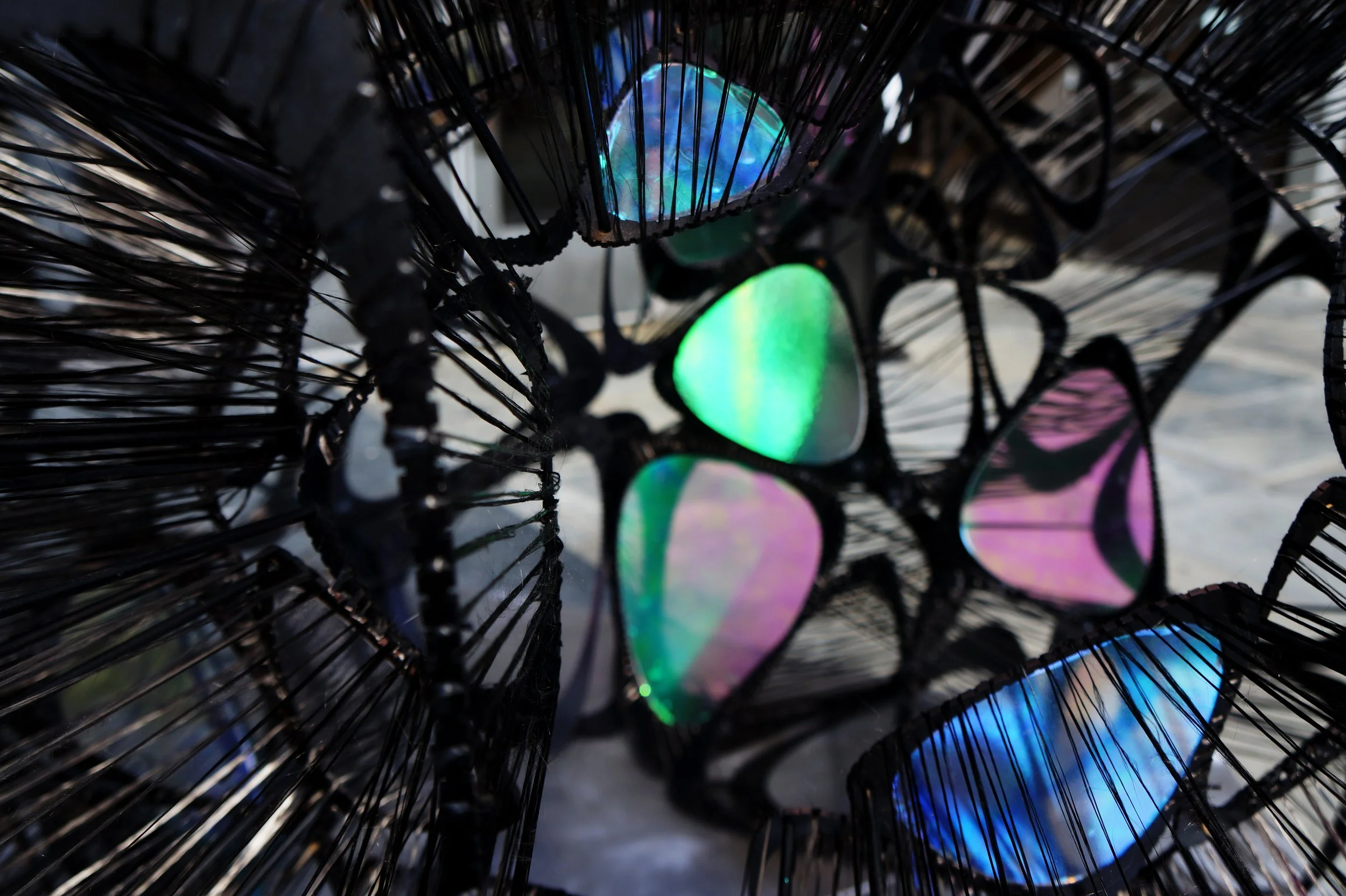
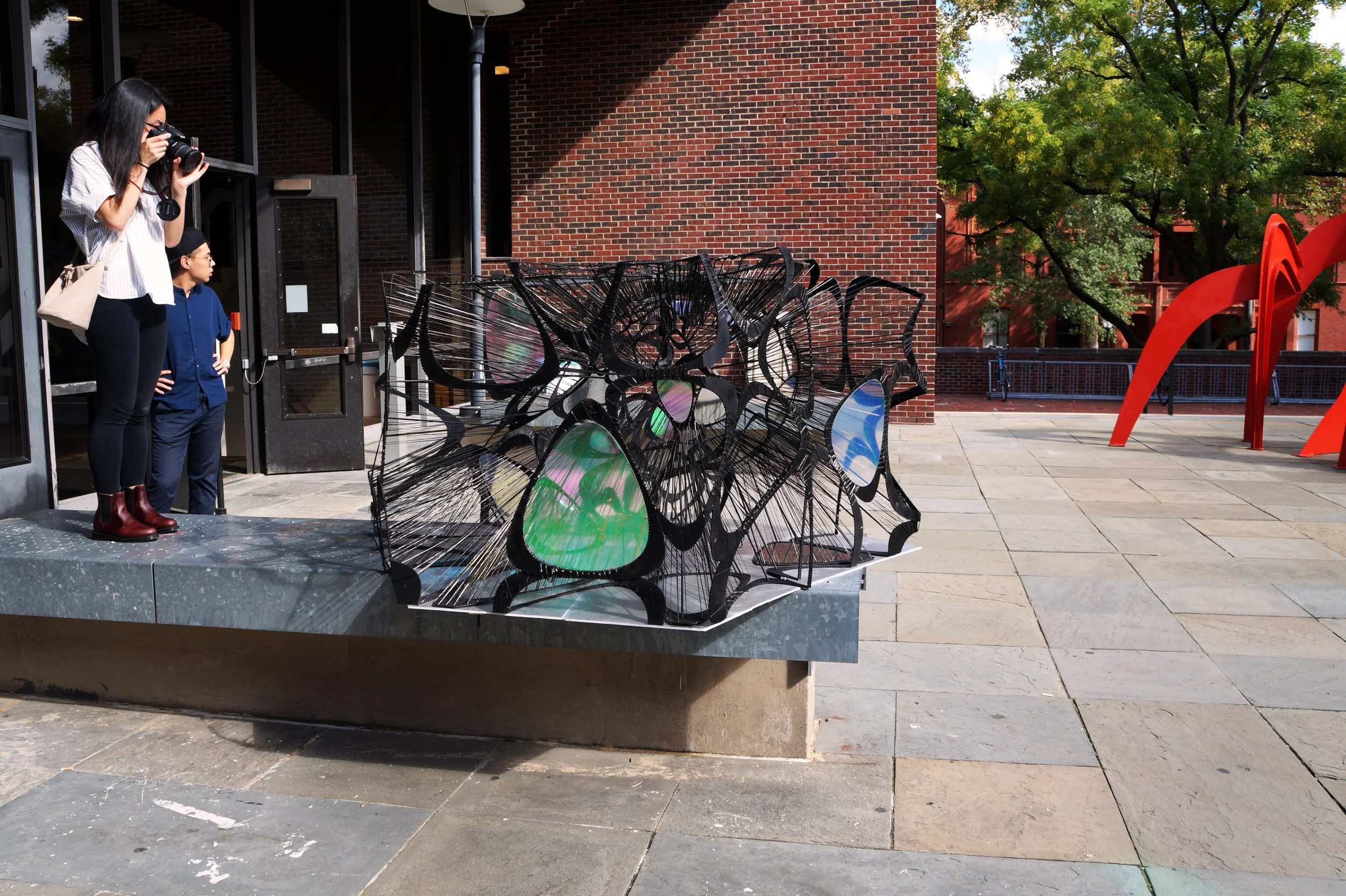
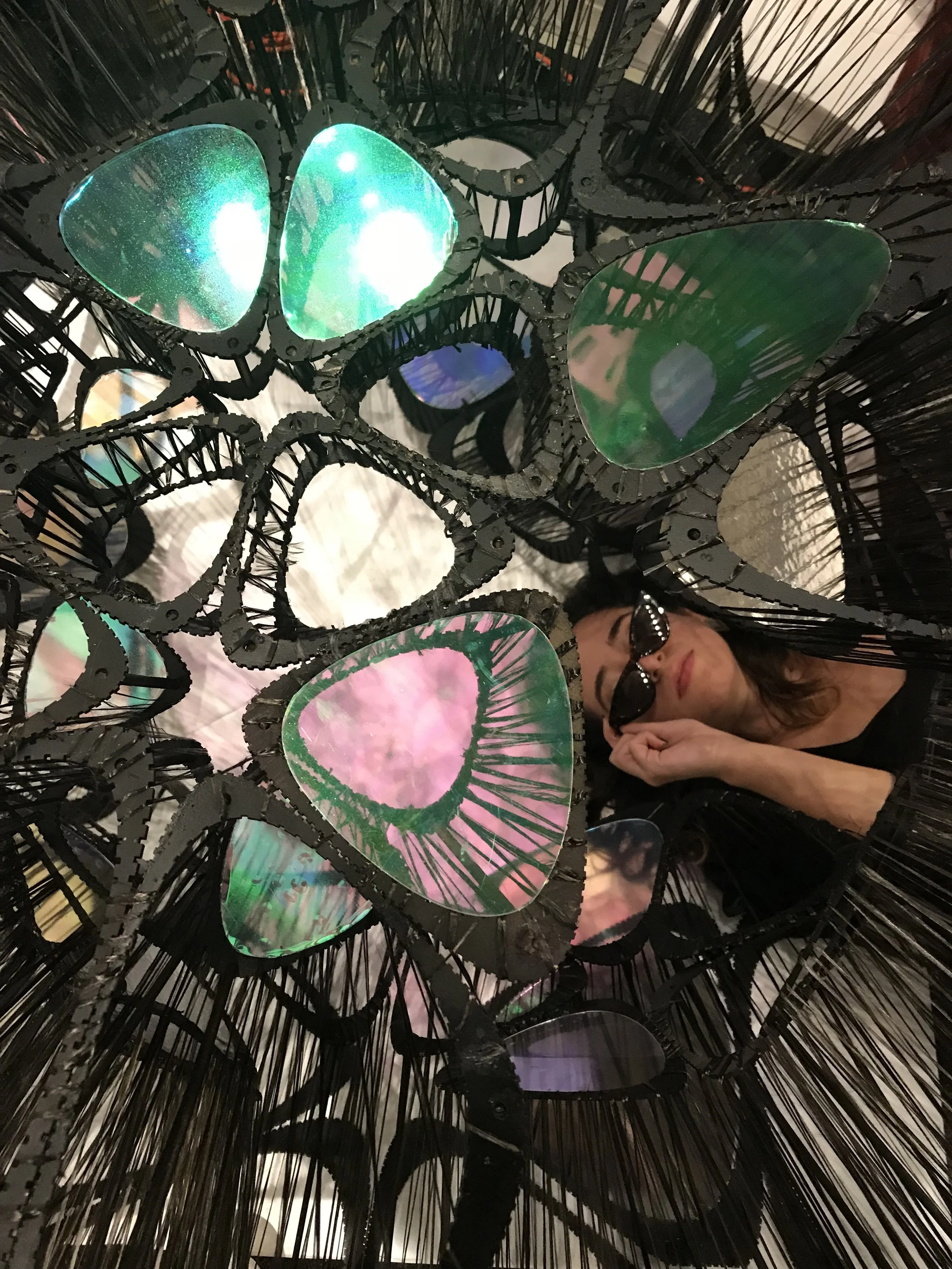
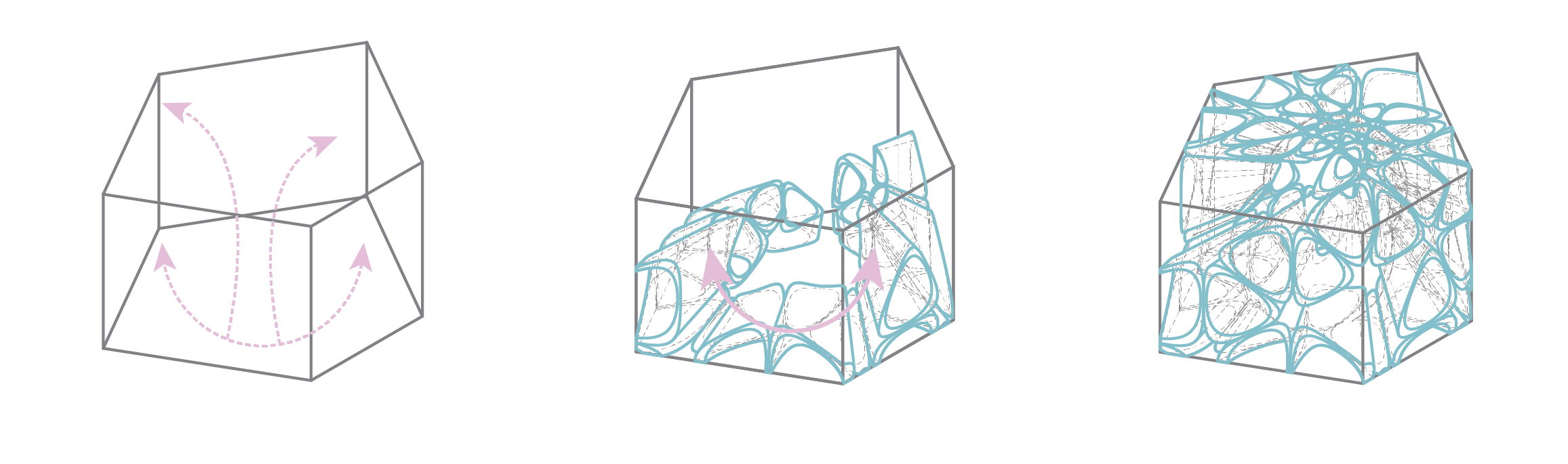
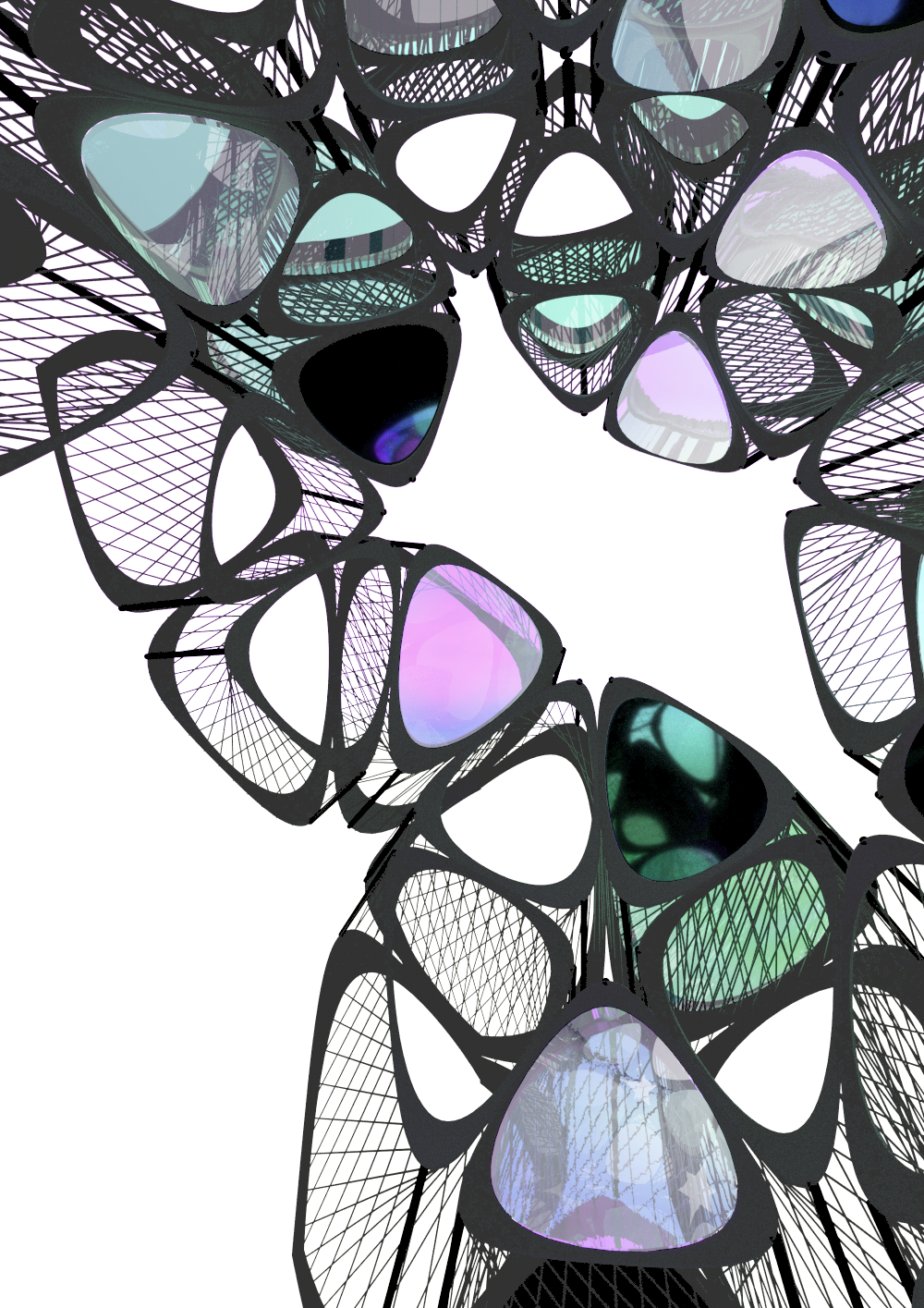
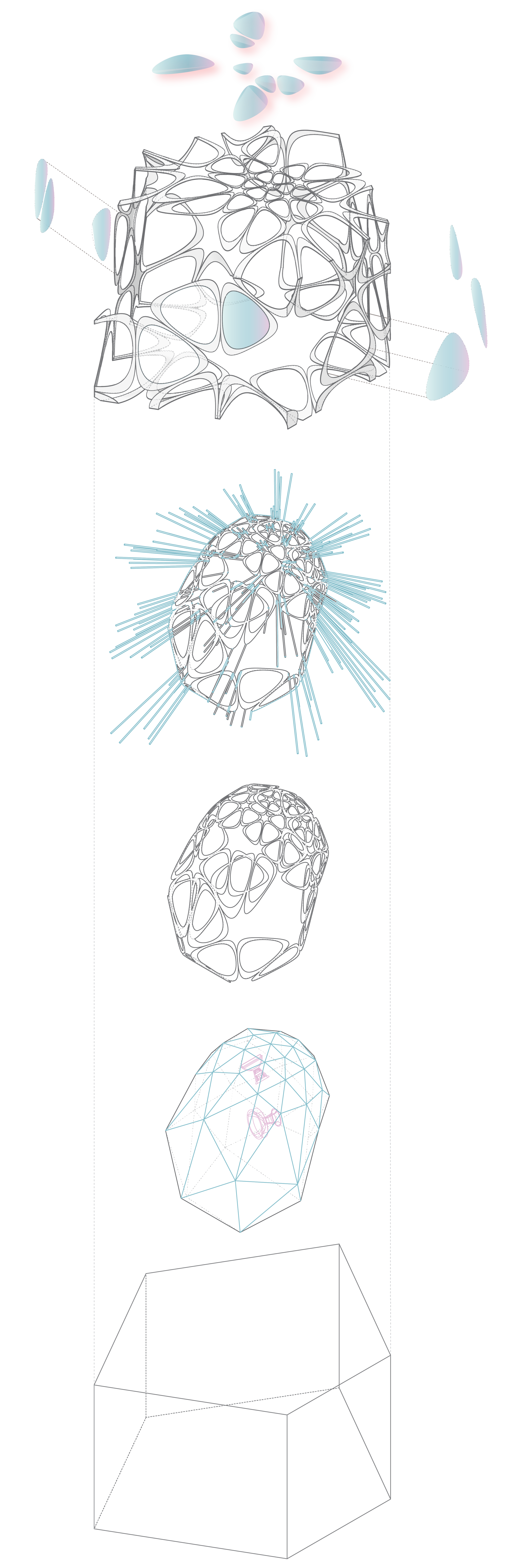
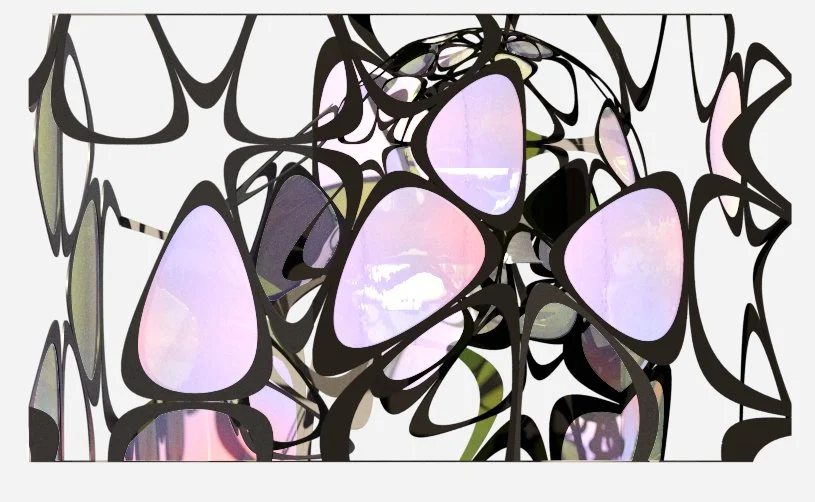
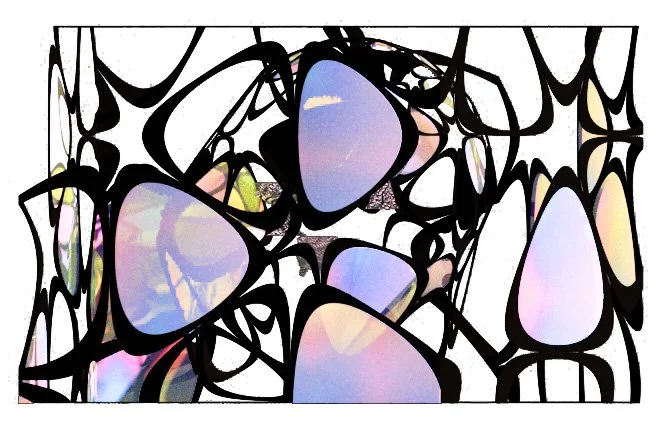
A kaleidoscope is a viewing instrument, reflecting, refracting and fragmenting images. Objects become hard to distinguish as they are broken up into symmetrical patterns. In this chamber for artifacts the visual effects of a kaleidoscope are materialized into a three-dimensional form that performs differently from a traditional kaleidoscope yet gives the viewer the same sense of disorientation. Modules are radiated symmetrically from a center point and intersected with iridescent and mirror planes, causing light to bounce and refract between modules.
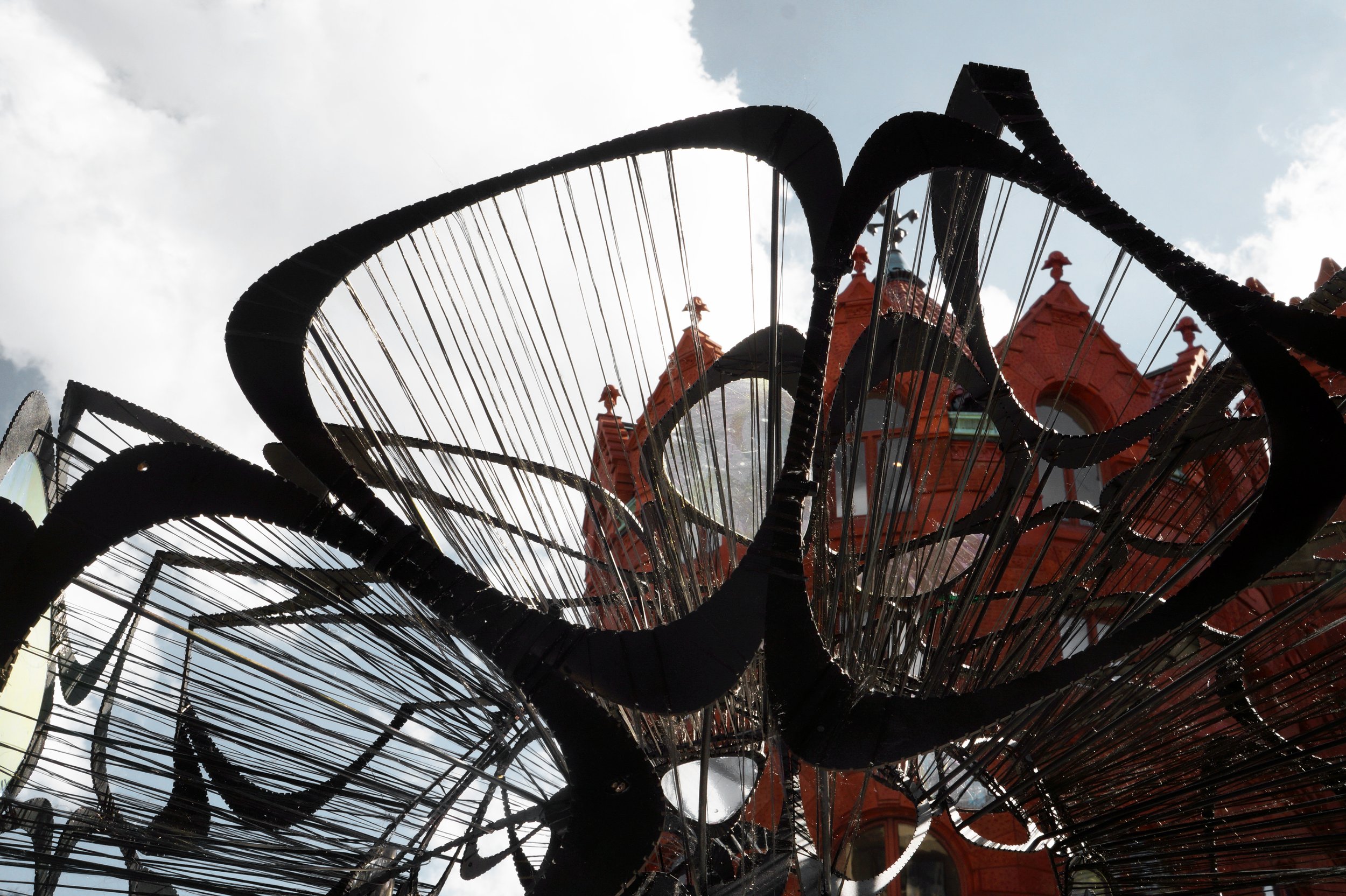
Varying densities and angles of linear cladding along the modules also blur the boundaries between modules and creates moiré effects. These disorientating measures ultimately force the viewer to explore and peer into the model in order to spatially place where the artifacts are located. In effect the chamber becomes a kaleidoscopic viewing machine, allowing the viewer to again experience a playful curiosity similar to a child looking through a toy kaleidoscope for the first time.
Process
Layers
Elevation 1
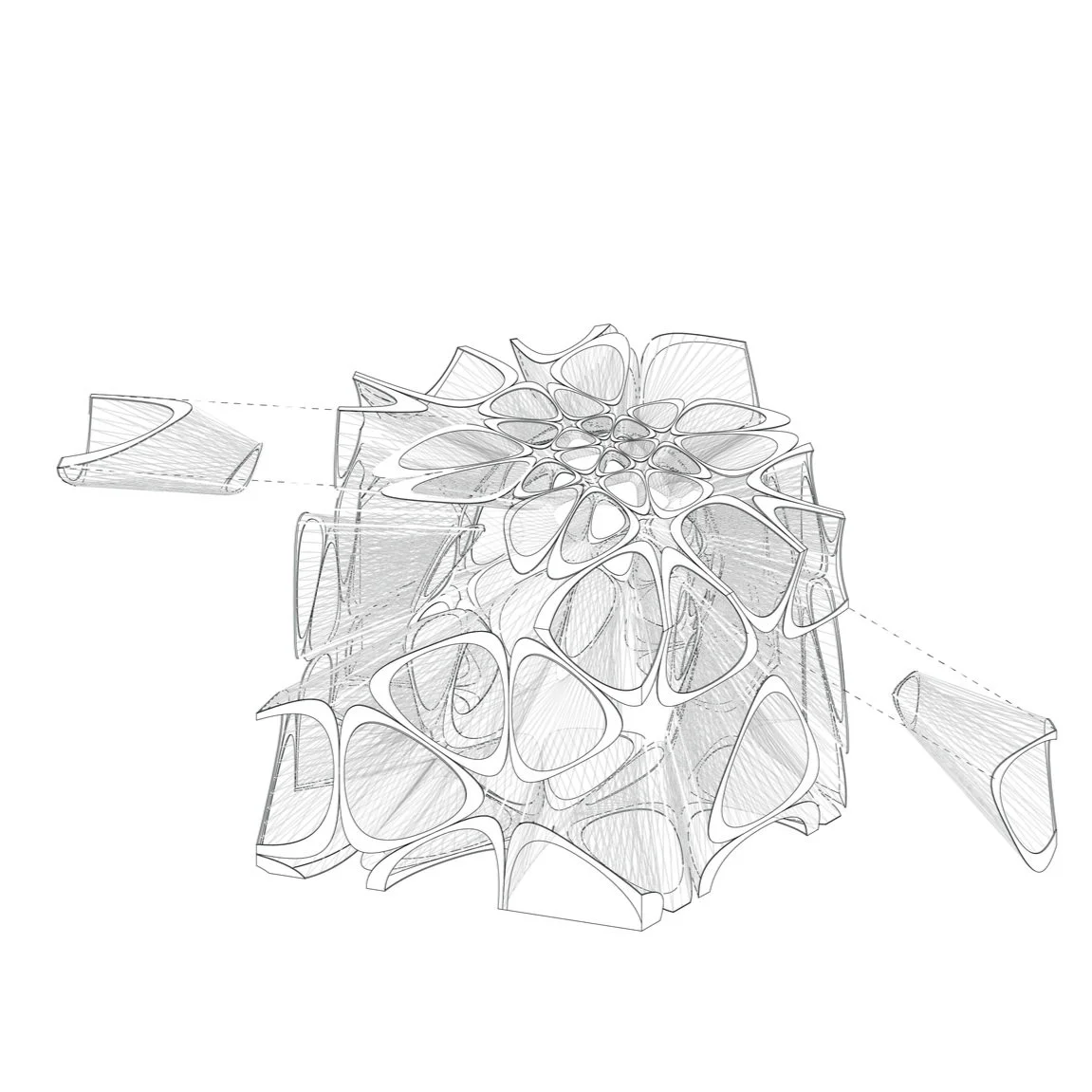
Overall Design
Elevation 2